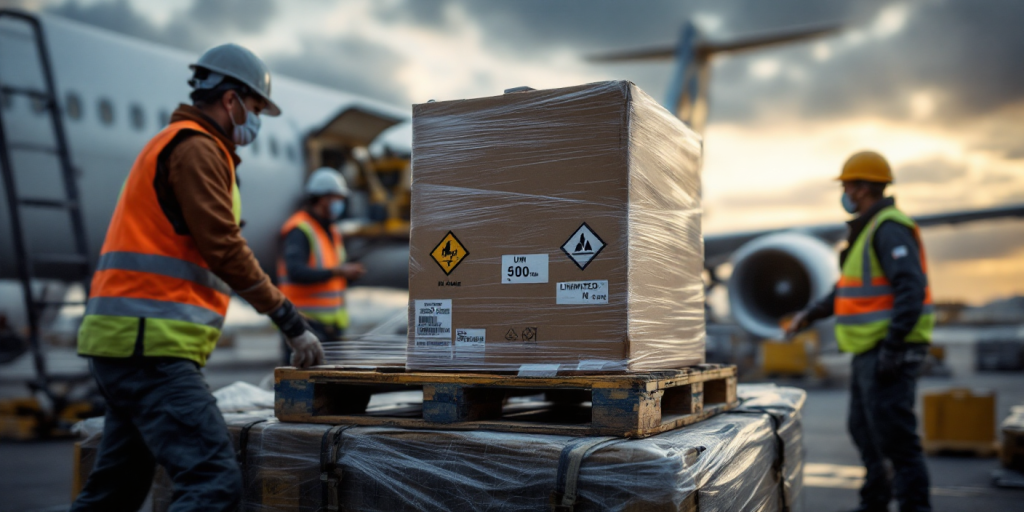
How to Calculate Desi (Volumetric Weight) for International Shipments?
In cargo shipments, the unit used to measure volumetric weight is called desi. Since desi is used in calculating the shipping cost (freight), it is a very important concept for senders. Another key point is that desi calculation varies depending on the mode of transportation. In this article, we will answer the questions “How is desi calculated according to transportation modes?” and “Is the shipment charged based on its actual weight or volumetric weight?”
The Importance of Desi Calculation in International Shipping Pricing
First of all, it should be noted that when determining freight costs, the generally accepted rule worldwide is to charge based on whichever is greater: actual weight or volumetric weight. This means that when shipping abroad, if the actual weight of your shipment is greater than its volumetric weight, the actual weight is used. If the volumetric weight calculated by the desi formula is greater, then the desi is taken as the basis for pricing. Therefore, proper packaging of international shipments and accurate measurement of the package’s weight and dimensions are extremely important for the sender. Unnecessarily large packaging increases the desi, which in turn increases the freight cost. It should not be forgotten that accurate measurements protect you from incorrect freight charges.
Desi Calculation According to Transportation Modes
When calculating the desi of your shipments, whether export or import, the formula applied varies depending on the service type used. The desi calculation formulas by transportation mode can be summarized as follows:
- Air Express (Courier) Service Desi Calculation:
length x width x height / 5000 = a, where a = volumetric weight (kg) - Air Cargo Service Desi Calculation:
length x width x height / 6000 = a, where a = volumetric weight (kg) - Road Transport Service Desi Calculation:
length x width x height / 3000 = a, where a = volumetric weight (kg) - Sea Freight Service Desi Calculation:
product quantity x (length x width x height / 1,000,000) = cbm
or
length x width x height / 3000 = a, where a = volumetric weight (kg)
Desi Calculation Example
If we put the calculation methods mentioned above into practice with an example:
Assume that a shipment with dimensions 80 x 60 x 40 cm, an actual weight of 10 kg, will be sent from Türkiye to the Netherlands via air express courier service, and the cost per kilogram is 4.2 EUR/kg.
80 x 60 x 40 / 5000 = 38.4, which is rounded up to 39 kg as the chargeable weight (desi). Decimal values are always rounded up to the next whole number. This rule also applies when the dimensions include decimal values.
For example, if the dimensions were 80.4 x 60.2 x 40 cm, they would be calculated as 81 x 61 x 40 cm.
In the example above, since the volumetric weight is higher than the actual weight, the chargeable weight (CW) is taken as 39 kg. For a shipment with a unit cost of 4.2 EUR/kg, the freight cost would be calculated as:
4.2 x 39 = 163.8 EUR
In addition, another important point is that some transportation modes and services have size limits. Shipments that exceed these limits may be subject to additional charges. These extra cost rules may vary depending on the main carrier company performing the transportation. Therefore, when sending shipments abroad, be sure to get detailed information from your logistics provider.
When you log in to app.quickshipper.com, where the QuickShipper panel is located, and enter the length, width, and height of your international shipment into the relevant fields, the desi calculation will be performed automatically by the digital panel.
Contact us to get detailed information about desi calculation.







 QUICKSHIPPER

 QUICKSHIPPER